
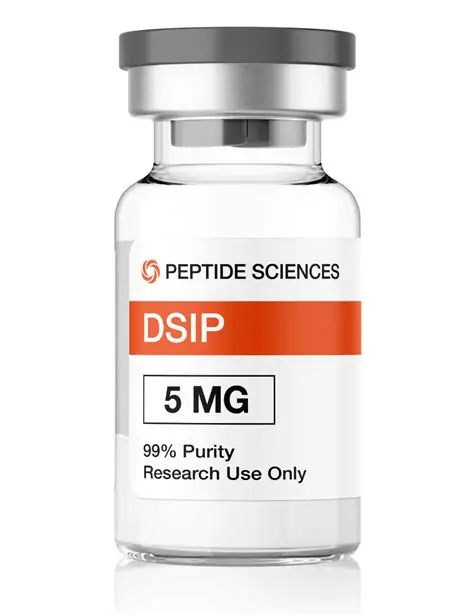
DSIP Peptide: What Is Delta Sleep-Inducing Peptide? DSIP, short for Delta Sleep-Inducing Peptide, is a naturally occurring peptide that has been studied for its potential relationship with sleep, stress responses, and neuroendocrine regulation. First identified in research involving sleep-related biological processes, DSIP has attracted scientific interest because of its possible role in the complex mechanisms that influence sleep and circadian function.
What Is DSIP?
Delta Sleep-Inducing Peptide is a short peptide consisting of nine amino acids. Researchers have investigated DSIP in connection with sleep regulation and the body’s response to stress. The peptide has also been examined for possible interactions with neuroendocrine and hormonal pathways.
Despite its name, the biological role of DSIP is not fully understood. Research findings have been mixed, and more studies are needed to establish exactly how the peptide functions in humans.
How Does DSIP Work?
The precise mechanism of DSIP remains an area of scientific investigation. Experimental research has explored whether DSIP may influence sleep-related signaling, stress pathways, and neuroendocrine activity.
Some studies have investigated its potential relationship with brain activity associated with sleep. However, the complexity of sleep regulation makes it difficult to attribute changes in sleep patterns to a single peptide or biological pathway.
Because research is still developing, DSIP should not be described as a proven sleep treatment or substitute for clinically established therapies.
DSIP and Sleep Research
Interest in DSIP peptide research is largely connected to sleep physiology. Scientists have explored whether DSIP may influence sleep architecture, particularly processes associated with slow-wave or delta sleep.
Research has also considered possible relationships between DSIP and stress. Sleep and stress are closely connected biological processes, and studying peptides such as DSIP may help researchers better understand how these systems interact.
However, laboratory findings do not necessarily demonstrate that commercially available DSIP products provide measurable benefits for people. Additional controlled research is needed to determine its potential applications.
Potential Research Areas
Beyond sleep research, DSIP has been investigated in areas involving stress responses, pain-related mechanisms, neuroendocrine signaling, and biological rhythms. These areas remain primarily research-focused, and evidence varies considerably between experimental models.
Consumers should be cautious of online claims that present DSIP as a guaranteed solution for insomnia, anxiety, stress, recovery, or other medical conditions. Such claims may go beyond what current scientific evidence supports.
DSIP Safety Considerations
The safety profile of DSIP requires careful consideration, particularly when products are obtained outside regulated medical or research settings. Peptide products may vary in purity, concentration, sterility, storage requirements, and labeling accuracy.
Anyone considering DSIP or another experimental peptide should consult a qualified healthcare professional and rely on reputable scientific information when evaluating potential risks and applications.
Final Thoughts
DSIP (Delta Sleep-Inducing Peptide) remains an interesting subject in sleep and neuroendocrine research. Although scientists have investigated its potential relationship with sleep, stress, and biological regulation, its exact role and practical applications require further study. Understanding the difference between experimental evidence and established medical use is essential when researching DSIP peptides.




Reviews
There are no reviews yet.