
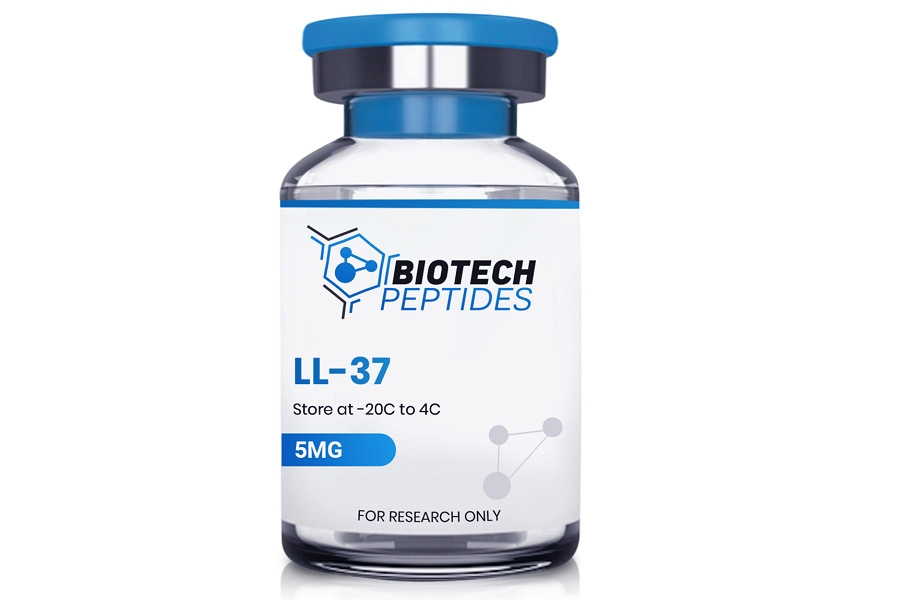
What Is LL-37.?
LL-37 is a naturally occurring antimicrobial peptide that belongs to the cathelicidin family of host-defense peptides. It is produced from the human protein hCAP18 and is released through enzymatic processing into the active LL-37 peptide.
LL-37 has attracted considerable scientific interest because of its broad biological activity. Researchers study the peptide in connection with innate immunity, antimicrobial activity, inflammation, wound biology, and cellular signaling.
LL-37 occurs naturally in humans, it is sometimes described online as a therapeutic peptide. However, natural biological activity should not be confused with clinical approval or established therapeutic effectiveness.
LL-37 Peptide Structure
LL-37 is a 37-amino-acid peptide derived from the C-terminal portion of human cathelicidin. Its name reflects this structure: “LL” refers to the first two amino acids, while “37” refers to the peptide’s length.
LL-37 peptide has a positively charged character and an amphipathic structure, properties that contribute to its interactions with microbial membranes and biological molecules.These structural characteristics make LL-37 an important subject in antimicrobial peptide research.
LL-37 can interact with microbial membranes and other cellular components. Scientists have also investigated its ability to influence immune signaling and inflammatory pathways.
Rather than functioning solely as an antimicrobial molecule, LL-37 appears to have multiple biological roles. Research has examined its interactions with immune cells, epithelial cells, receptors, and signaling pathways.This broad activity is one reason LL-37 continues to receive attention in laboratory and biomedical research.
LL-37 and Antimicrobial Research
One of the best-known areas of LL-37 research is antimicrobial activity.Laboratory studies have investigated LL-37 against different types of microorganisms. The peptide’s amphipathic nature allows it to interact with microbial membranes, making it an important model for understanding how host-defense peptides can affect pathogens.Researchers are also studying how microorganisms may respond to antimicrobial peptides and how LL-37 activity is regulated within the human body.
.
Reviews
There are no reviews yet.