
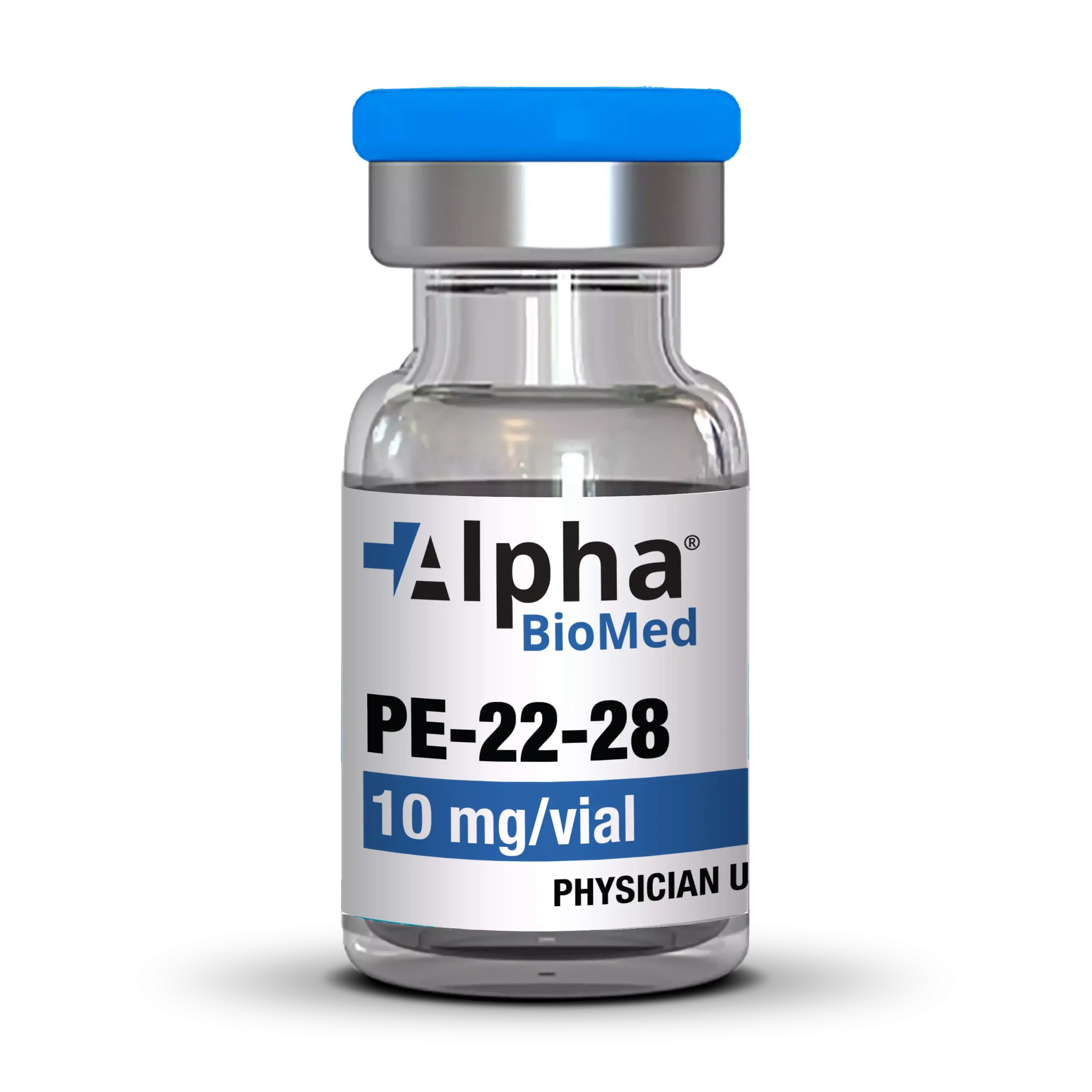
PE-22-28: A Comprehensive Guide to the Spadin-Derived Research Peptide
What Is PE-22-28?
PE-22-28 is a synthetic seven-amino-acid peptide that has attracted attention in neuroscience and peptide research because of its interaction with the TREK-1 potassium channel. It was developed as a shortened analog of spadin, an endogenous peptide associated with the sortilin protein.
The name PE-22-28 refers to the specific seven-residue sequence selected from the parent peptide during research into shorter spadin fragments. The sequence reported in the literature is Gly-Val-Ser-Trp-Gly-Leu-Arg (GVSWGLR). Current chemical references list PE-22-28 with a molecular formula of C35H55N11O9 and a molecular weight of approximately 773.89 Da.
PE-22-28 is particularly interesting because researchers identified it as a highly active shortened spadin analog capable of inhibiting TREK-1 in experimental systems. A 2017 study published in Frontiers in Pharmacology investigated PE-22-28 alongside other shortened spadin analogs, examining channel activity, stability, neurogenesis, synaptogenesis, and behavioral effects in animal models.
Importantly, PE-22-28 should not be confused with an approved antidepressant, cognitive-enhancement medication, or clinically established treatment. The evidence surrounding this compound remains primarily preclinical, meaning that laboratory and animal findings cannot automatically be translated into proven effects in humans.
PE-22-28 at a Glance
| Property | Description |
|---|---|
| Compound | PE-22-28 |
| Type | Synthetic heptapeptide |
| Sequence | Gly-Val-Ser-Trp-Gly-Leu-Arg (GVSWGLR) |
| Molecular formula | C35H55N11O9 |
| Molecular weight | Approximately 773.89 Da |
| Research target | TREK-1 / KCNK2 potassium channel |
| Parent peptide | Spadin |
| Research area | Neuroscience and ion-channel research |
| Evidence stage | Preclinical |
| Human therapeutic approval | None established |
These characteristics make PE-22-28 primarily relevant to researchers studying peptide-channel interactions, neuronal signaling, potassium channels, and mechanisms associated with neuroplasticity.
The Connection Between PE-22-28 and Spadin
Understanding PE-22-28 begins with understanding spadin.
Spadin is an endogenous peptide derived from the propeptide region of sortilin. Earlier research identified spadin as an inhibitor of TREK-1, a two-pore-domain potassium channel involved in regulating neuronal electrical activity.
Researchers subsequently examined how spadin could be shortened while retaining activity against TREK-1. This screening process led to the identification of PE-22-28 as a particularly effective seven-amino-acid fragment.


Reviews
There are no reviews yet.