
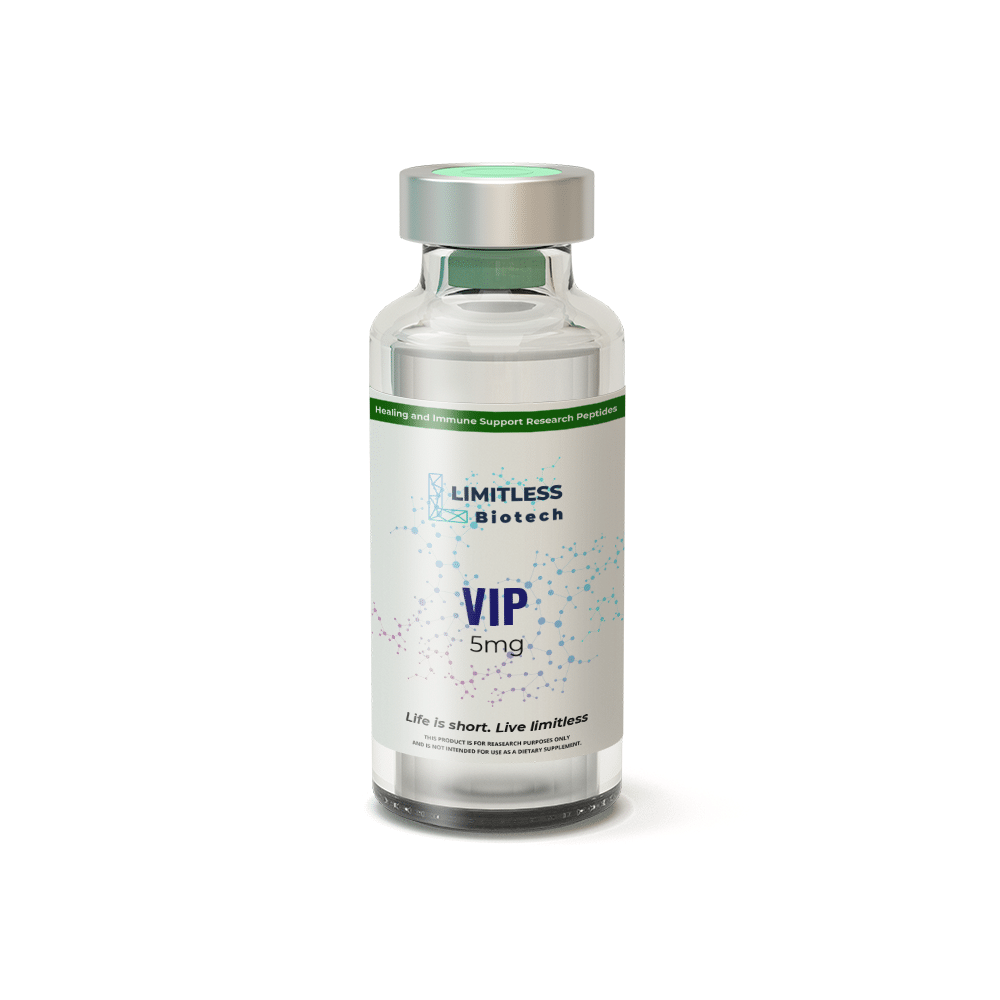
VIP is a 28-amino-acid neuropeptide that belongs to the glucagon/secretin superfamily. It is found in the central and peripheral nervous systems, as well as in tissues such as the gastrointestinal tract, heart, lungs, pancreas, and brain.
Researchers first identified VIP because of its strong vasodilatory activity, but later studies showed that it does far more than relax blood vessels. Today, it is recognized as a multifunctional signaling molecule involved in smooth muscle relaxation, secretion, immune modulation, and cellular communication.
How VIP Works
VIP acts by binding to specific G protein-coupled receptors, mainly VPAC1 and VPAC2, which trigger intracellular signaling pathways such as adenylyl cyclase activation and increased cyclic AMP. This signaling helps regulate smooth muscle tone, fluid secretion, and inflammatory responses.
In the digestive system, VIP relaxes smooth muscle in the esophagus, stomach, gallbladder, and intestines while also stimulating the secretion of water, electrolytes, pancreatic juice, and bile. It also inhibits gastric acid secretion, which makes it a major regulator of gastrointestinal function.
Why VIP Matters
VIP is important because it influences several systems at once. In the cardiovascular system, it acts as a potent vasodilator and can increase coronary blood flow, heart rate, and cardiac contractility. In the immune system, it has anti-inflammatory and immunomodulatory effects that have made it a target of interest in autoimmune and inflammatory disease research.
In the nervous system, functions as a neurotransmitter and neuromodulator and is involved in neuronal communication, neuroendocrine control, and protective signaling. This wide range of activity is why it is often described as a pleiotropic peptide.
Potential Research Uses
This product is being studied in several areas of biomedical research:
-
Inflammatory and autoimmune conditions.
-
Pulmonary and airway disease.
-
Gastrointestinal regulation and motility disorders.
-
Cardiovascular blood flow and vasodilation research.
-
Neuroprotection and central nervous system signaling.
Some studies also explore in relation to tumors, glandular secretion, and tissue growth regulation, although much of this remains research-focused rather than standard clinical use.



Reviews
There are no reviews yet.